How to choose herringbone tiles
What is the difference between herringbone and chevron?
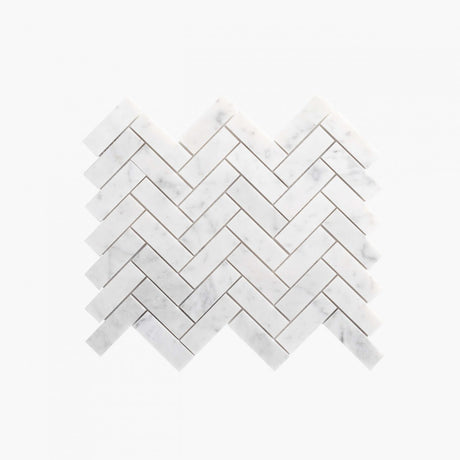
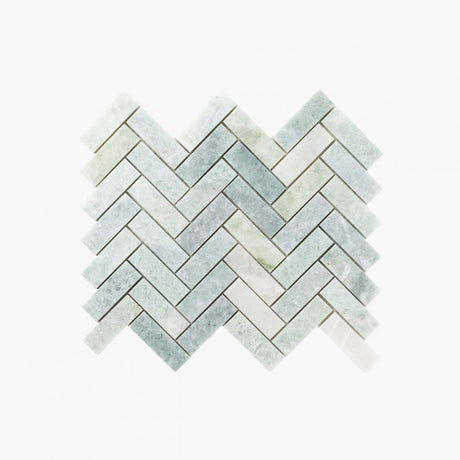
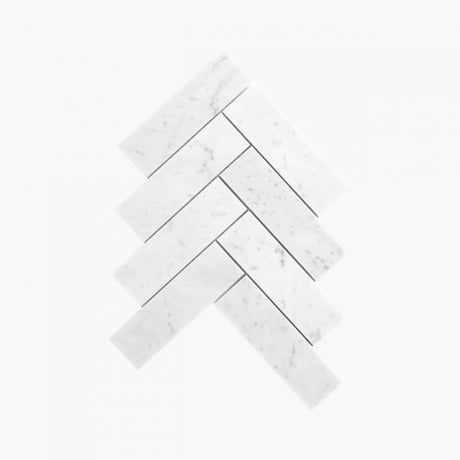
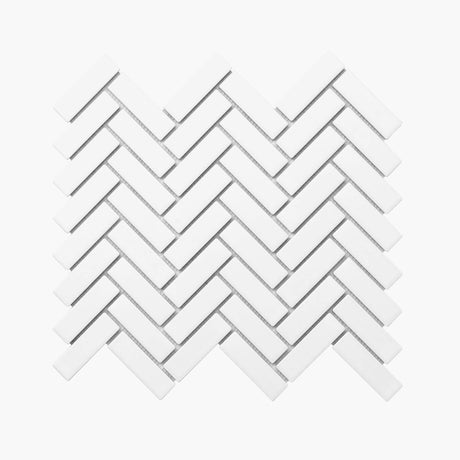
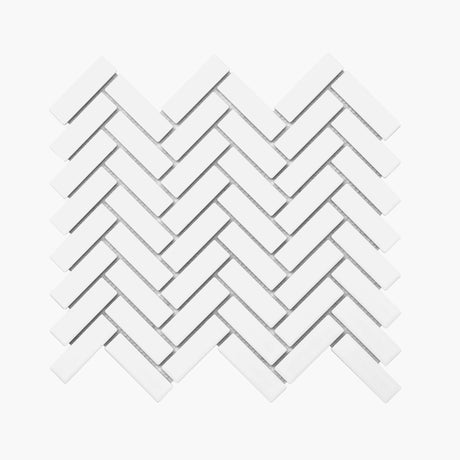
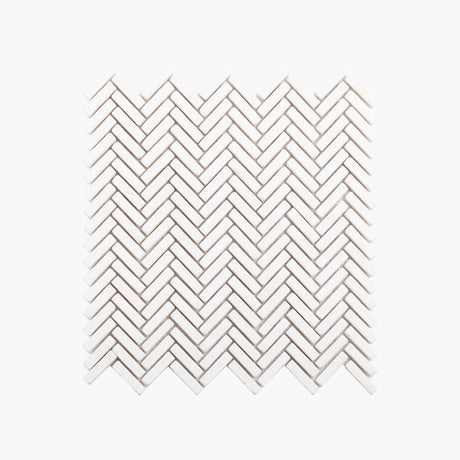
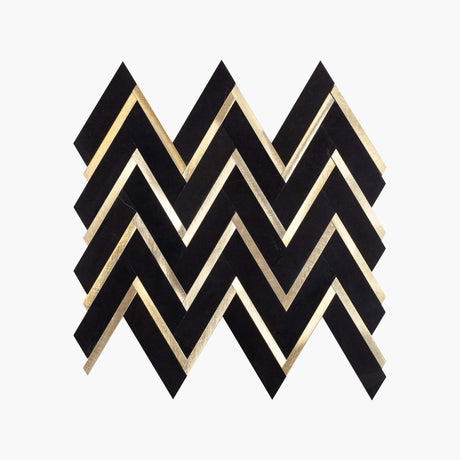
Herringbone sets rectangular pieces at right angles so the ends stagger into a zig-zag. Chevron cuts the ends at an angle so the pieces meet in a continuous V. Both read as a diagonal stripe, but herringbone looks busier and more woven. If you want the sharper, cleaner V, look at chevron tiles instead.
Which piece size should you pick?
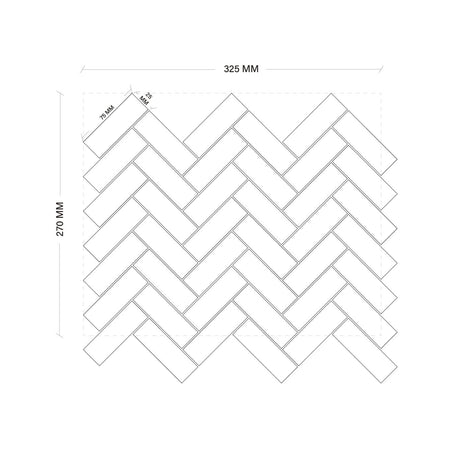
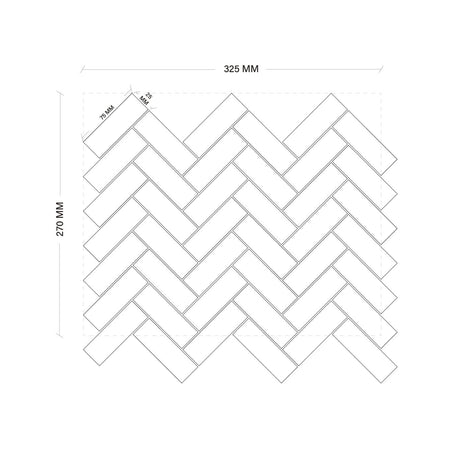
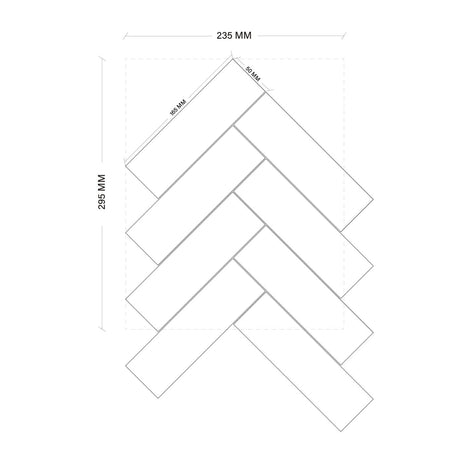
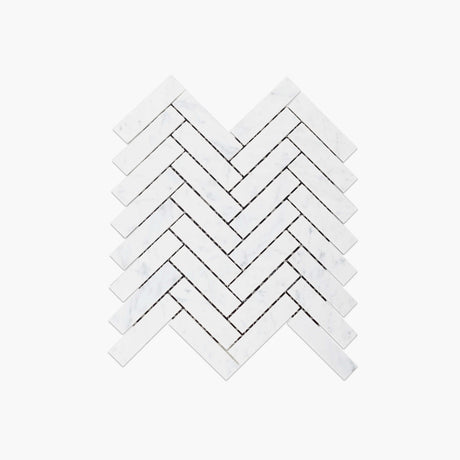
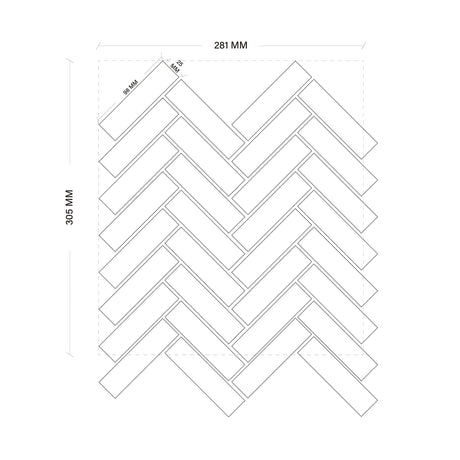
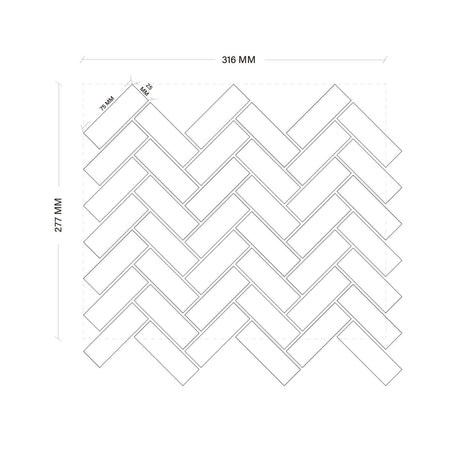
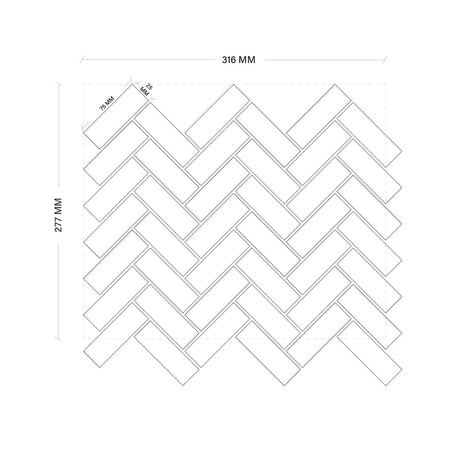
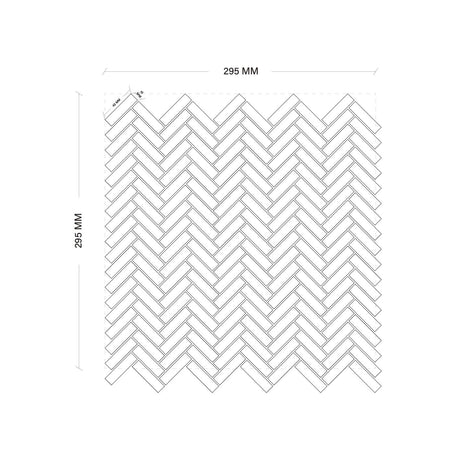
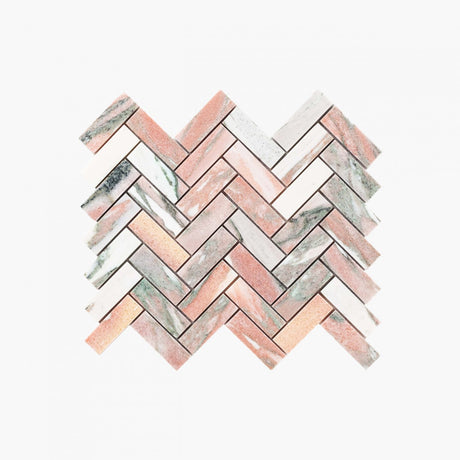
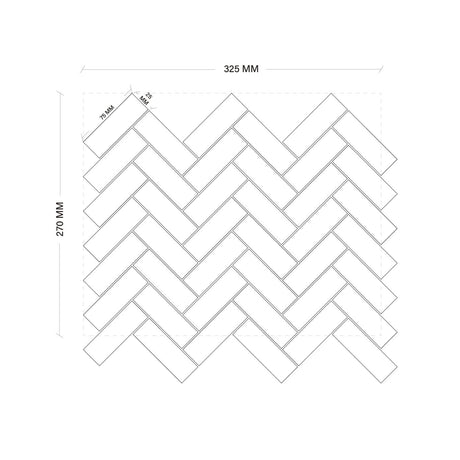
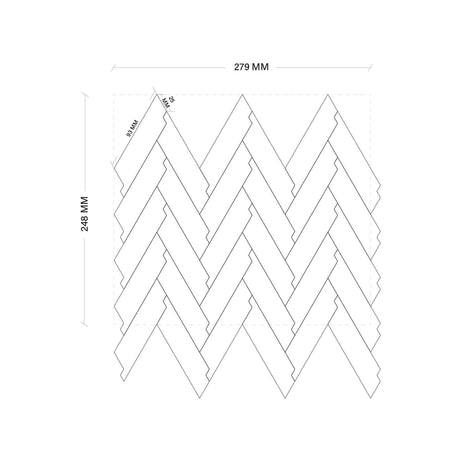
Natural stone pieces here run from 10 x 40 mm tumbled sheets to 50 x 165 mm, and the porcelain mosaics are 25 x 75 mm. Smaller pieces add many grout lines and suit niches and feature panels, while larger pieces look calmer across a whole wall. Check the piece size as well as the sheet size, and run the pattern vertically to add height or horizontally to widen a wall.
Should you choose stone, porcelain or timber look?
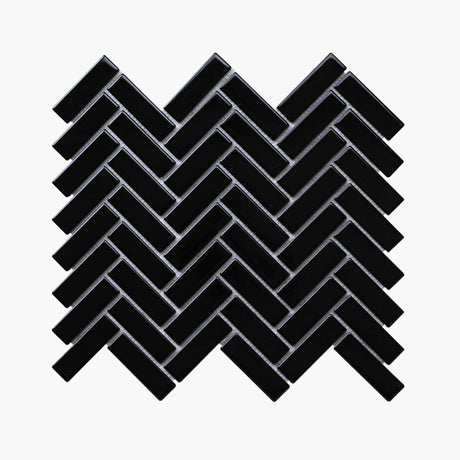
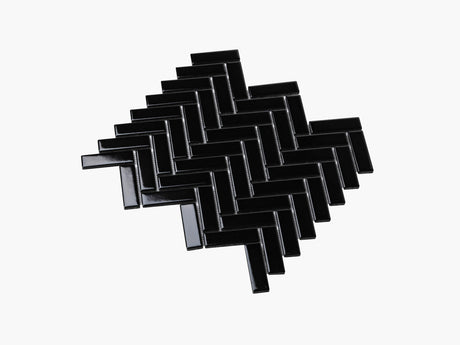
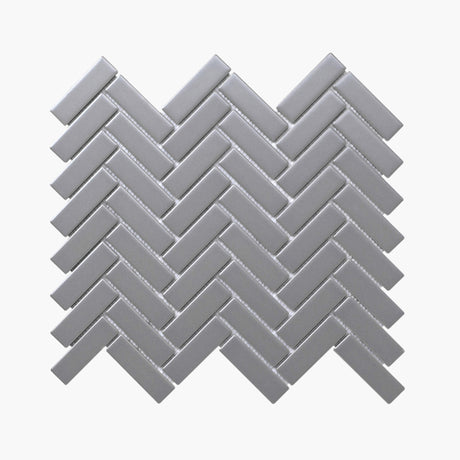
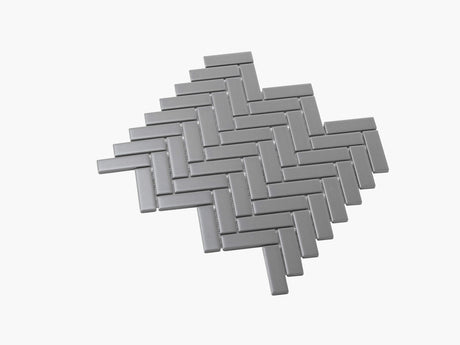
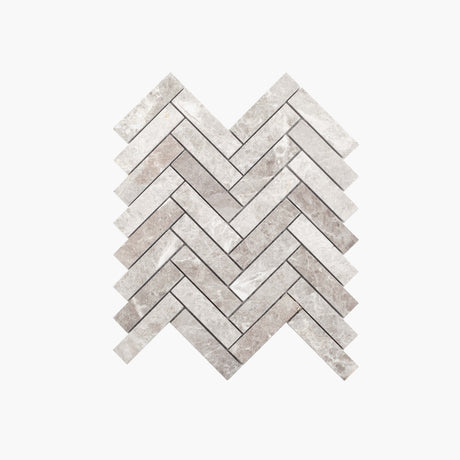
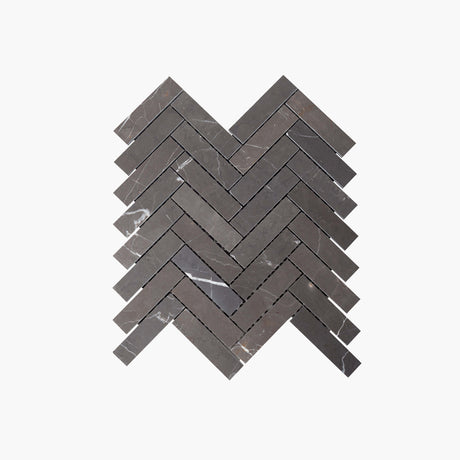
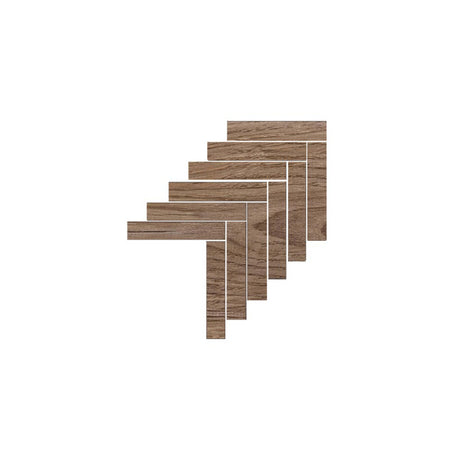
Marble and other natural stone give honed or tumbled surfaces with natural colour variation, and stone needs care advice and sometimes a sealer. Porcelain mosaics come in matt and gloss white, black and grey. Timber-look herringbone panels bring a wood pattern to floors. Browse marble mosaics, porcelain mosaics or timber look tiles.
Where can you use herringbone?
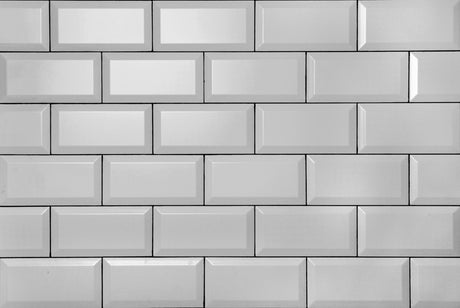
Mosaic herringbone suits splashbacks, bathroom walls and shower niches. Check the product page for floor use, slip rating and wet-area suitability before you use any herringbone on a floor. For a simpler layout, a straight or offset subway tile lay keeps the cuts down, and the mosaic tile range gives more small-format options.
Herringbone at a glance
| Type | What to expect | What to check |
|---|
| Natural stone mosaic | Marble, limestone and basalt in honed or tumbled finish, pieces from 10 x 40 to 50 x 165 mm | Care advice and whether it needs a sealer |
| Porcelain mosaic | 25 x 75 mm pieces in matt or gloss white, black and grey | Finish and colour in your own light |
| Porcelain tile | 20 x 100 mm white, polished or matt | Edge and grout width |
| Timber look panel | 355 x 422 mm panels in oak, spotted gum and grey tones | Slip rating before any floor use |
Herringbone tile FAQs
Does herringbone use more tile?
Usually yes. The zig-zag layout needs angled cuts along every edge, so you waste more than with a straight lay. Ask your installer for a layout and an allowance before you order, and keep a few spare sheets or boxes from the same batch in case you need repairs later.
How do you start a herringbone tile pattern?
Installers usually mark a centre line, dry-lay the first rows and adjust so the cuts at both ends match, then fix from the centre outwards. Mosaic sheets and loose pieces are set out differently, so follow the product instructions and agree the starting point with your installer.
Can you use herringbone tiles on a bathroom floor?
Only if the product is listed for floors and carries a suitable slip rating, so check the product page. Some herringbone products are listed for floors and others only for walls and splashbacks. Confirm shower floors and wet areas with your installer first.