How to choose diamond tiles
Which diamond size should you pick?
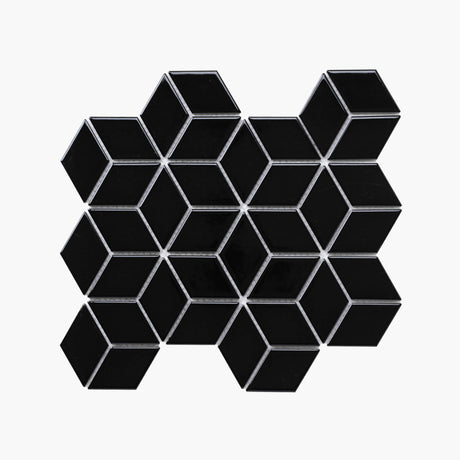
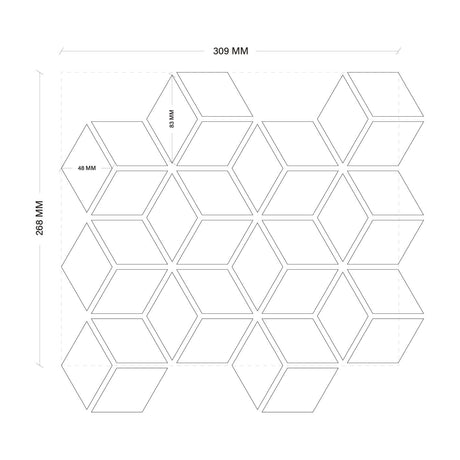
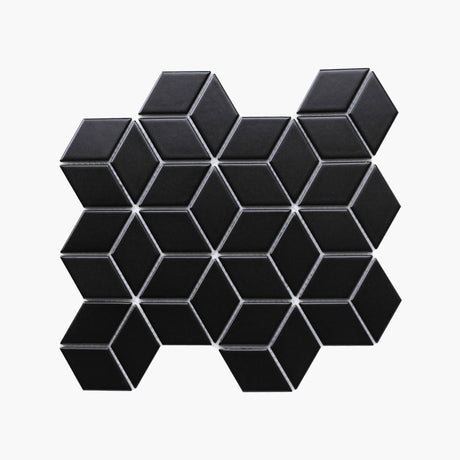
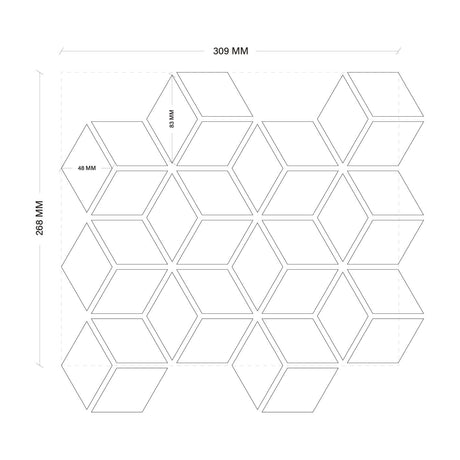
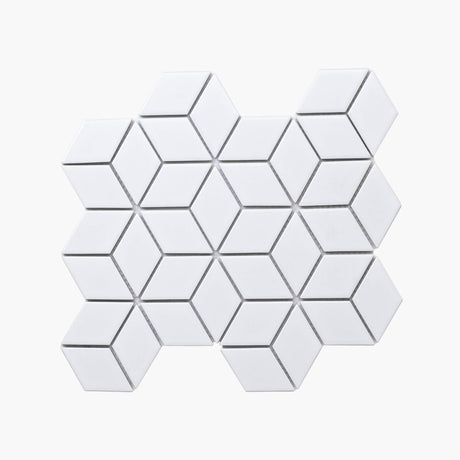
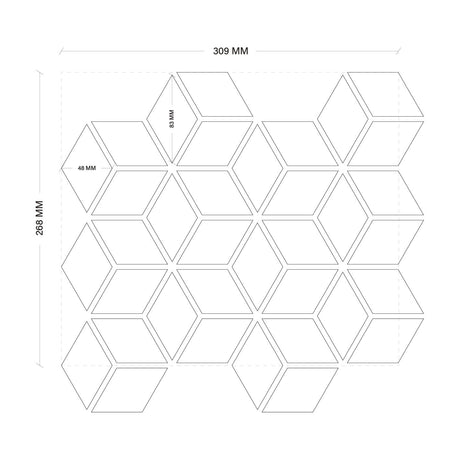
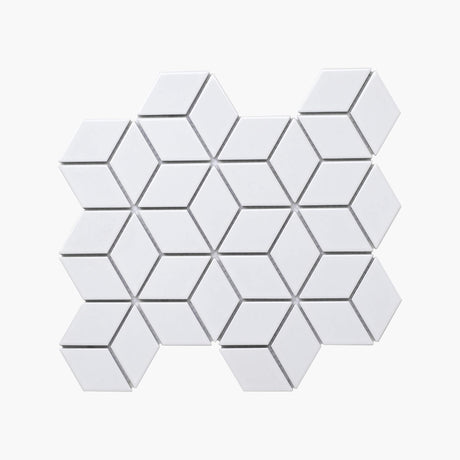
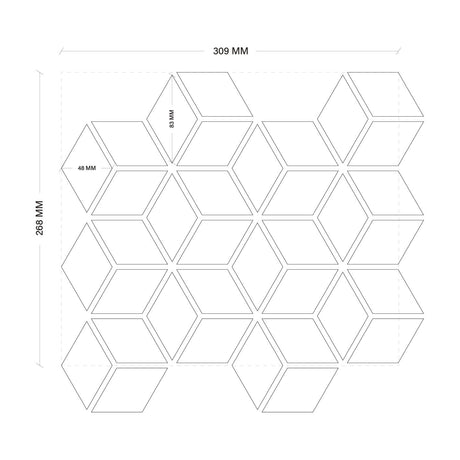
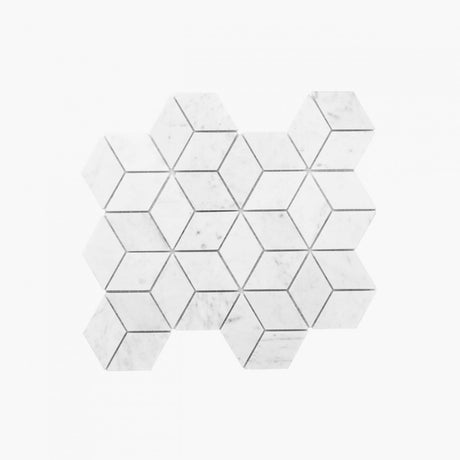
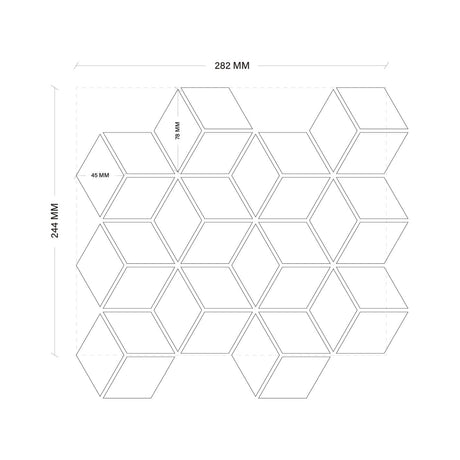
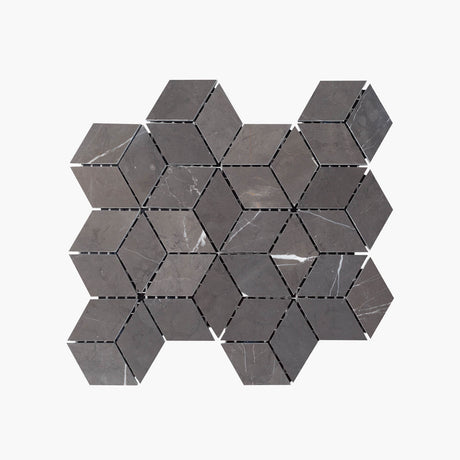
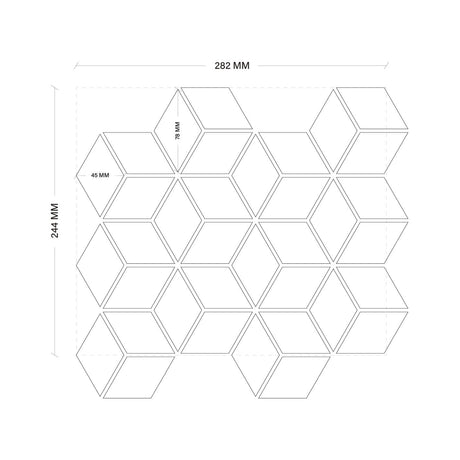
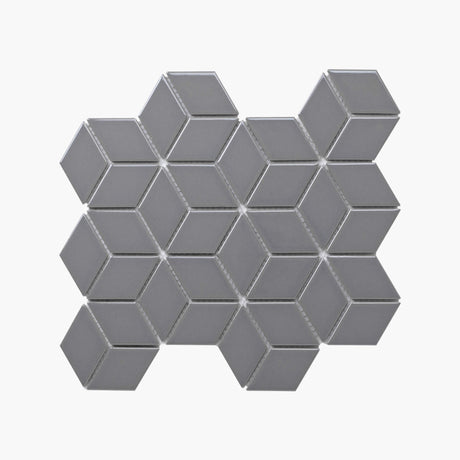
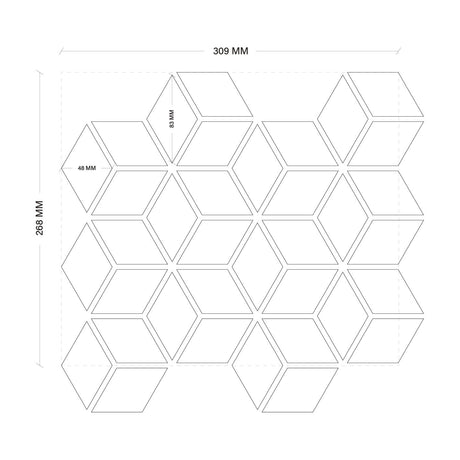
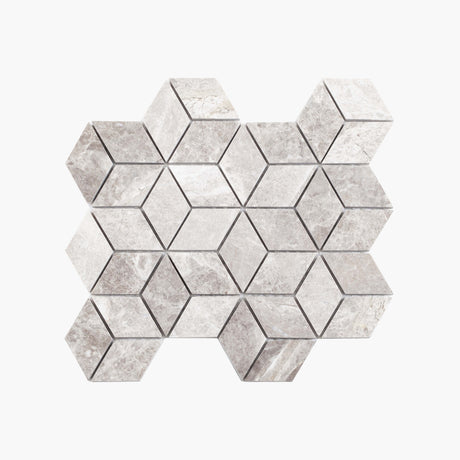
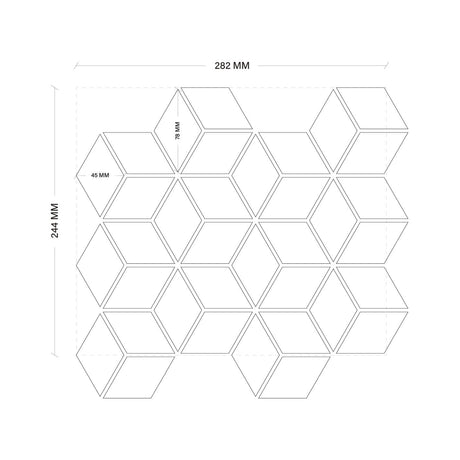
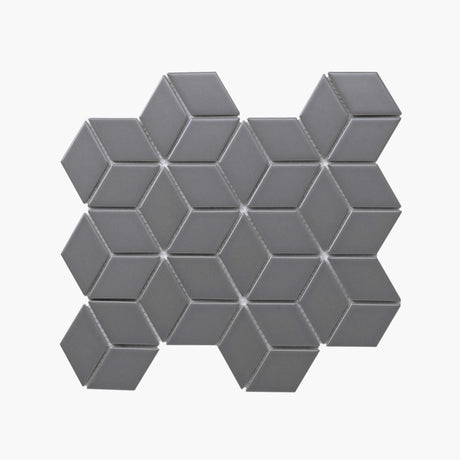
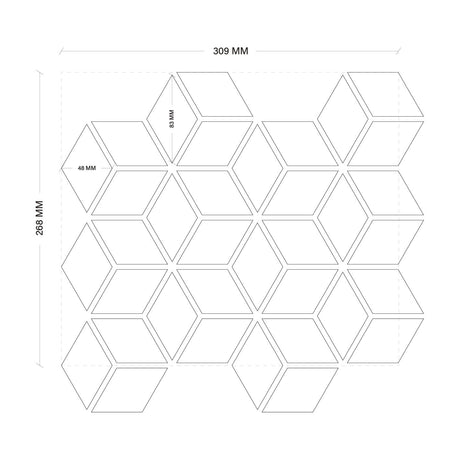
Porcelain diamonds are 83 x 48 mm and natural stone diamonds are 45 x 78 mm. Small diamonds add many grout lines and a fine, detailed pattern that suits niches, splashbacks and feature panels. Check the piece size as well as the sheet size, and see how the diamonds look when laid into a repeating grid.
What does a diamond layout look like?
A single colour gives a quiet diagonal grid, while a mix of light, mid and dark pieces can create a cube or stacked-box effect. Plain white, black and grey keep the pattern graphic, and honed stone adds softer variation. Grout colour changes how strong the lines look.
Porcelain or natural stone?
Porcelain diamonds come in matt and gloss white, black and grey. Natural stone diamonds are honed white, grey and silver grey marble, with natural colour variation and a need for care advice and sometimes a sealer. Browse porcelain mosaics or marble mosaics.
Where can you use diamond tiles?
Diamond mosaics suit splashbacks, shower walls and feature panels, where the repeating grid becomes the focus. Check the product page for wall, floor and wet-area use, and for floor use confirm the slip rating. For other angular shapes, compare hexagon tiles and chevron tiles.
Diamond at a glance
| Type | What to expect | What to check |
|---|
| Porcelain | 83 x 48 mm in matt or gloss white, black and grey | Finish and grout colour |
| Natural stone | 45 x 78 mm honed white, grey and silver grey | Care advice and sealer |
| Layout | Single colour grid or a mixed cube effect | A sample laid in your light |
Diamond tile FAQs
How do you lay diamond pattern tile?
Diamond pieces are set so the points meet along a diagonal grid. Installers mark a centre point, dry-lay the first sheets and check the lines before fixing. With a three-colour mix the same shapes can also form a cube pattern. Follow the product instructions and agree the layout with your installer.
Can you lay a diamond pattern on a floor?
Only if the product is listed for floors and carries a suitable slip rating, so check the product page. The diamond mosaics here are mainly for walls and splashbacks, and a diamond layout also adds many angled cuts at the edges. Confirm floors and wet areas with your installer.
What do you cut porcelain diamond tiles with?
Porcelain is dense, and installers usually cut it with a wet saw fitted with a diamond blade, and use nippers for small trims. Diamond pieces need angled cuts at the edges, so allow extra for waste and ask an experienced installer to cut and fit the border rows.