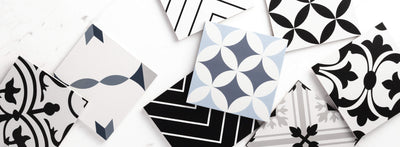
How to choose wall tiles
Which wall tiles suit each room?
Pick the room first, because a shower wall, a kitchen wall and a garden wall do different jobs. Bathroom wall tiles take steam and constant water, kitchen wall tiles need to wipe clean around the bench and cooktop, Feature wall tiles add one statement surface, and outdoor wall tiles stand up to sun and rain. Our guide to wall tile types compares the main types.
Which material is best for walls?
Porcelain is the most common wall tile here (1,236 products) because it absorbs very little water and suits wet walls. Glazed ceramic (75) is lighter and easier to cut, which helps on plasterboard and around fittings. Natural stone (136) brings real veining but needs sealing, and glass (93) mosaics add colour and reflect light in small areas.
Should I choose gloss or matt wall tiles?
Gloss tiles (329 products) reflect light, make a small bathroom feel brighter and wipe clean easily, which is why they suit splashbacks. Matt tiles (576) hide water marks and fingerprints and look calmer on large walls. Honed (168) and tumbled (40) finishes are mostly marble mosaics, with a soft, natural surface.
What size and shape of wall tile should I choose?
Large formats such as 600 x 600 mm (236 products) and 1200 x 600 mm (229) give fewer grout lines on big walls and in showers. Subway tiles (329) are the classic choice for splashbacks and feature strips, and mosaics (214) fit around niches, curves and taps. Check the weight and adhesive needed before fixing large tiles to plasterboard.
Which wall tile goes where
| Wall | What to choose | Why |
|---|
| Shower walls | Porcelain, large format, matt or gloss | Constant water, fewer grout lines |
| Bathroom feature wall | Marble or stone look, or mosaic | One statement surface |
| Kitchen splashback | Subway, mosaic or gloss tile | Splashes and grease wipe off |
| Outdoor wall | Outdoor wall tiles | Sun and rain exposure |
Wall tile FAQs
Are porcelain tiles good for bathroom walls?
Yes. Porcelain absorbs very little water, so it suits shower and bathroom walls, and it comes in large formats that reduce grout lines. Heavier porcelain needs a suitable adhesive and a sound wall, so ask your tiler before fixing large tiles to plasterboard. Read which tile is best for shower walls for more on shower walls.
Are white tiles hard to keep clean?
Not the tile itself: glazed white tiles wipe clean quickly. What shows dirt is the grout, so a light grey or off-white grout and regular sealing keep white walls looking fresh for longer. Gloss white shows water spots less than you might expect, and our guide to choosing white tiles covers the options.
What colour tile is best for shower walls?
Light colours make a small shower feel bigger and brighter, and they show soap residue less than dark tiles. Marble and stone looks hide water marks well because of their natural pattern. If you like a dark wall, choose a matt finish and a matching grout so water spots and joints show less.